
Inside Korea’s $350 Billion Trade Gamble at APEC 2025
A High-Stakes Moment in Gyeongju
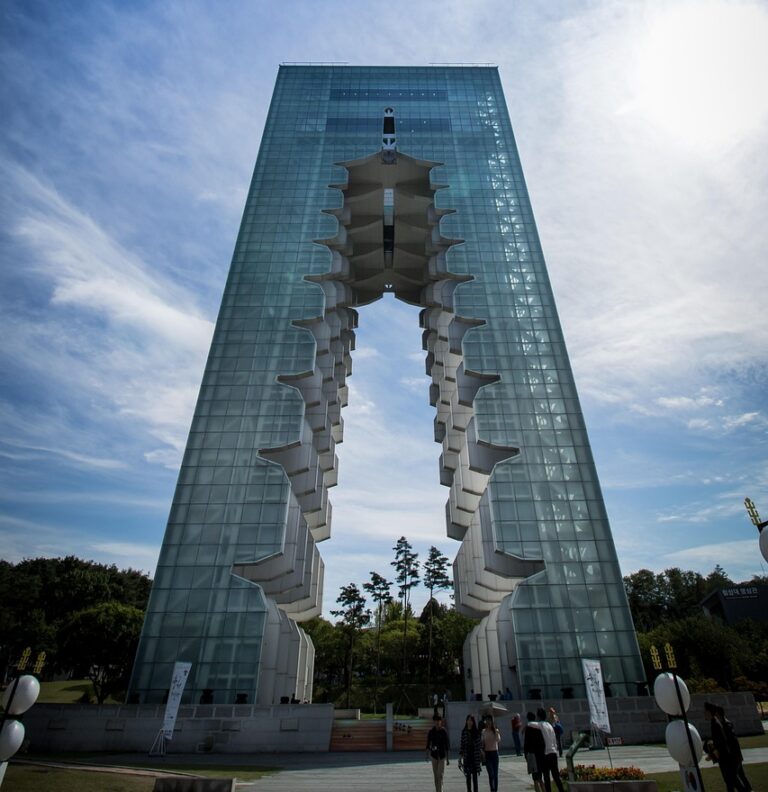
The quiet city of Gyeongju, known for its ancient temples, has transformed into the epicenter of global trade politics this week. As the Asia-Pacific Economic Cooperation (APEC 2025) summit unfolds, South Korea is not just hosting — it’s negotiating its biggest trade ambition yet: a $350 billion package aimed at boosting investment, expanding exports, and securing long-term tariff relief from the United States.
This move comes amid growing global uncertainty, where nations are reshuffling alliances and trade rules to protect domestic industries. For Korea, a mid-sized economic powerhouse dependent on exports, this moment could determine its next decade of growth.
The $350 Billion Vision
President Lee Jae-myung’s administration is seeking to expand Korea’s role in the high-tech global supply chain — not just as a manufacturer, but as a core innovation partner. The proposed $350 billion deal includes:
- Tariff-free semiconductor exports to U.S. partners.
- Increased investment in EV batteries and clean-energy materials.
- Joint R&D programs in biotech, quantum computing, and digital infrastructure.
According to local media, the blueprint positions South Korea as a reliable hub between the U.S. and Asia for advanced technology production and supply-chain security.
🇺🇸 Washington’s Balancing Act
The U.S. response so far has been cautious. While American firms are eager to expand partnerships with Korean chipmakers and battery producers, tariff politics remain tense. The Biden and Trump administrations have both used tariffs strategically — and Korea’s goal is to carve out a sustainable exemption or long-term framework that guarantees export stability.
Analysts note that if South Korea succeeds, it could become a blueprint for mid-sized economies trying to secure fair access to U.S. markets without being caught in superpower rivalries.
Asia’s Supply-Chain Chessboard
Beyond the U.S., South Korea faces rising competition from Japan, Vietnam, and India, all racing to capture global manufacturing and tech-supply opportunities.
- Japan’s government has invested heavily in semiconductor self-reliance.
- Vietnam is attracting new assembly and logistics bases.
- India is positioning itself as the “next factory of the world.”
South Korea’s answer? Go premium. By focusing on high-margin sectors like precision manufacturing, AI-integrated production, and defense technology, it hopes to stay ahead of lower-cost competitors.
Why It Matters
This trade gamble is more than numbers. It reflects how South Korea sees its future — as a connector between East and West, a hub of innovation, and a trusted player in global markets.
If successful, the deal could:
- Secure billions in U.S. tech investment.
- Strengthen the won through export confidence.
- Create new jobs in high-tech manufacturing and R&D.
But failure would leave Korea vulnerable to shifting global trade winds — especially as protectionism and AI-driven automation reshape traditional markets.
The World Is Watching
As APEC 2025 progresses, cameras and analysts are focused on whether Gyeongju will mark a turning point in Korea’s trade destiny or another diplomatic balancing act. Either way, South Korea’s bold bet is sending a clear message: the era of quiet followership is over — and Seoul is ready to lead.